A shelter that arrives damaged, late or with a duty bill nobody budgeted for is not a transport problem. It is a procurement problem written into the contract months earlier, on a single line of the quotation.
The incoterm is that line. It decides who books the vessel, who owns the cargo when a forklift goes through a coated panel, who clears customs, and who absorbs the difference when the freight rate moves between quotation and sailing. Buyers routinely negotiate 4% off the unit price and then lose 12% in destination charges that were never itemised.
This guide is written for the officer who has to defend the delivered cost rather than the free-on-board price, in front of a finance department or an audit.
Which Incoterm actually fits a shelter shipment?
For containerised shelters, quote FOB or CPT and keep control of the freight; use DAP when you want one delivered price without carrying customs risk; use DDP only where the supplier has a registered importer in your country. CIF is the weakest default, because its insurance excludes exactly the damage shelters suffer.
Rule | Seller pays to | Risk transfers | Import clearance | Buyer must arrange | Fit for shelter orders |
EXW | Factory gate | At collection | Buyer | Everything, including export clearance | Poor — you cannot export from China without a local entity |
FOB | On board at named port | When cargo is on board | Buyer | Ocean freight, insurance, import | Good default for buyers with a forwarder |
CFR | Named destination port | On board at origin | Buyer | Insurance, import, inland | Workable, but uninsured by default |
CIF | Named destination port, plus minimum cover | On board at origin | Buyer | Import, inland, any cover above ICC (C) | Common in quotations, weakest protection |
CPT | Named destination | On handing to first carrier | Buyer | Insurance, import, inland | Best fit for containers under Incoterms 2020 |
CIP | Named destination, plus cover | On handing to first carrier | Buyer | Import, inland | Strongest insured option short of DDP |
DAP | Named place, not unloaded | At destination, ready for unloading | Buyer | Import clearance, duty, VAT, unloading | Good for public bodies that must clear their own imports |
DDP | Named place, import cleared | At destination, not unloaded | Seller | Unloading only | Only where the seller can act as importer |
The ICC's own guidance in Incoterms 2020 is explicit that FOB, CFR and CIF were framed for bulk cargo, where the ship's rail is a meaningful handover point. A container of shelter panels is handed to a carrier weeks before it is loaded, so CPT and CIP describe the transaction better. Most quotations still say CIF because that is what the sales template says.
The term you accept decides which costs you can still benchmark: under FOB you shop the freight and see every charge; under DDP you see one number and inherit the margin inside it.
What must the quotation show before you can compare freight?
Demand six separate figures: ocean freight, origin charges, destination charges, inland delivery, insurance and duty basis. A single delivered price cannot be compared across bidders, and a freight rate without a validity date is a number with an expiry you have not been told.
Item | What to demand in writing | Why it changes the comparison |
Named port pair | Loading port and destination port, spelled out | "China port" to "your port" is not a route; transit differs by 20 days across South China load ports |
Rate validity | A stated expiry, typically 14–30 days, plus the peak-season surcharge basis | Freight quoted before a General Rate Increase is not the freight you will pay |
Charge split | Origin THC, documentation, ISPS, customs; destination THC, DO fee, CFS if LCL | Origin charges billed to the consignee are the most common "FOB" dispute |
Cargo data | CBM and gross weight per unit, crated, plus maximum crate dimensions | Freight is bought on volume and weight, not on units |
Packing specification | Crate type, ISPM 15 heat treatment, internal bracing, glass separation | Untreated timber is refused at destination; unbraced glass arrives broken |
HS classification | The code the supplier will declare, with a written rationale | Duty, anti-dumping scope and import licensing all follow the code |
Insurance clause | The Institute Cargo Clauses set, the insured value and the claims agent | CIF defaults to cover that excludes handling damage |
Exclusions | Unloading, crane hire, storage, re-delivery, detention after free time | These are the charges that appear on your invoice a month later |
Two conditional rules cut through most of the argument. If a bidder quotes one delivered figure with no split, treat the bid as non-compliant — the absence of a split is not a simplification, it is a refusal to be benchmarked. If the freight validity expires before your sailing date, the delivered price is provisional and must be re-confirmed in writing before you release the deposit.
An itemised quotation also lets you test the unit price against a known cost breakdown structure, so a suspiciously low freight line can be traced to a suspiciously high unit rate.
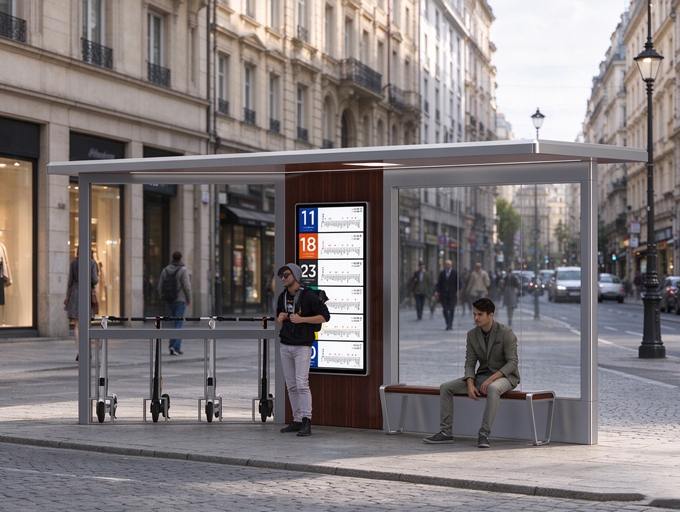
How many shelters fit in a container — and why does packing geometry set the price?
A 40 ft high-cube gives roughly 76 m³ of internal volume and a door opening of about 2,340 × 2,585 mm; a 6 m shelter packed knocked down occupies roughly 5–9 m³ crated, so eight to twelve units fit by volume, subject to weight and glass crating. Freight per unit falls through packing density, not negotiation.
Container | Internal length | Door opening (W × H) | Nominal volume | Indicative 6 m units, knocked down | When to use |
20 ft GP | 5,898 mm | 2,340 × 2,280 mm | 33 m³ | 3–5 | Small trial order; keeps capital tied up low |
40 ft GP | 12,032 mm | 2,340 × 2,280 mm | 67 m³ | 7–10 | Standard volume; widest carrier availability |
40 ft HC | 12,032 mm | 2,340 × 2,585 mm | 76 m³ | 8–12 | Best cost per unit where height is the constraint |
40 ft open top | 12,032 mm | Full length, no fixed header | 76 m³ | 2–4 assembled | Tall assembled units loaded by crane |
40 ft flat rack | 12,000 mm | Open | n/a | 2–6 | Oversize frames or lengths beyond 11.8 m |
Internal dimensions vary by operator; ISO 668 governs the external envelope and rating, not the internal millimetres. Three constraints decide the real number, and each belongs in the tender as a submission requirement:
Door opening height. An assembled shelter standing 2,600 mm high will not pass a 2,280 mm door on a standard 40 ft GP. Knocked-down packing is not a cost-saving trick, it is the only way the unit enters the box.
Member length. Posts and roof beams run the length of the container. Anything beyond about 11.8 m has to be spliced, and a splice is a structural connection that must be detailed, welded to EN 1090-2 execution class and inspected. The 26 m BRT structure supplied to Laos shipped as spliced modules for this reason, not by preference.
Glass crating. Tempered panels are cut before toughening and cannot be re-cut on site. A crate that stacks panels flat without edge protection and a moisture barrier will deliver a stack of granules. Glass crates should ship vertically, on edge, with the crate marked and the panels separated.
Require a packing plan drawing, a stuffing photograph report and a signed bill of lading against the plan, with timber crating heat-treated and marked to ISPM 15. A supplier who cannot produce a packing plan has not shipped this product before.
Who is the importer of record — and can a Chinese supplier really deliver DDP?
Only where the seller is established, or has appointed a fiscal representative, at destination. In the EU and the UK, a non-established seller usually cannot clear imports for VAT without local registration, so a nominal DDP term quietly reverts to DAP in practice, with duty and VAT billed to you afterwards.
Market | DDP workable? | What has to exist | What the buyer should write instead |
EU member state | Rarely | Seller VAT registration or fiscal representative; compliant invoice with your VAT number | DAP named place, buyer clears; retain DDP only with a named importer in the contract |
UK | Rarely | UK VAT registration; CDS declaration capability | DAP; if DDP, name the importer and the deferment account |
Gulf states | Sometimes | Local importer or free-zone entity; conformity certification for the product | DAP with the buyer's broker, or DDP through a named local agent |
Australia | Sometimes | ABN and GST registration, or a registered customs broker | DAP; confirm who pays GST and duty at the border |
United States | Rarely | Customs bond, importer number, ISF filing 24 hours before loading | DAP; never accept DDP without a US importer of record name |
South-East Asia | Varies by country | Local consignee; import licence for electrical goods in some markets | DAP to port, buyer's broker for clearance |
The DDP problem is not commercial, it is legal. Customs authorities require an identifiable importer who is liable for the declaration; a manufacturer can pay the duty as a commercial matter, but it cannot always be the declarant, and when it cannot, the term is fiction until an agent is inserted.
There is a second reason for publicly funded buyers. The invoice must carry the buyer's name and VAT number for the VAT to be recoverable and the transaction to survive audit, and a DDP invoice from a foreign entity often fails that test. If you are a public body, or a contractor whose client audits the import declaration, specify DAP with your own customs agent and price clearance separately.
【YEROO DATA NEEDED: standard Incoterms offered, port of loading, sailing frequency to named destination ports, and whether YEROO can act as importer of record in any specific market through a local entity or agent】.
Where does risk transfer, and what does transit damage actually cost?
Under FOB, CFR and CIF, risk passes when the cargo is on board at origin, which is before the ocean passage where most shelter damage occurs. CIF's default cover under Incoterms 2020 is Institute Cargo Clauses (C) at 110% of the contract price — a named-perils cover that responds to a sinking, not to a scratched panel.
Cover | Basis | Typical shelter loss covered | Typical shelter loss excluded | Clause to write |
ICC (C) | Named perils | Total loss, major casualty, general average | Coating abrasion, glass breakage, frame distortion, condensation | Accept only for low-value, well-crated consignments |
ICC (B) | Named perils, wider | Earthquake, water ingress from sea or river, washing overboard | Handling damage, stacking damage, theft | Minimum for coastal routes with transhipment |
ICC (A) | All risks subject to exclusions | Handling damage, breakage, deformation, water damage | Inherent vice, inadequate packing, delay | Specify for every project shipment |
Buyer's project policy | Open cover | Whatever the policy schedules | Depends on declaration discipline | Best where you ship monthly |
The practical gap is narrow but expensive. A scratched PVDF panel cannot be spot-repaired to match; a distorted frame means a replacement member on a new galvanising run; a broken tempered pane is a new furnace load. None of those is a casualty, and all of them are excluded under ICC (C).
Write the cover, the insured value and the claims agent into the contract. Name a surveyor at destination and require the carrier's damage report before the container leaves the terminal — a claim opened three weeks later, on site, is a claim the insurer will decline.
How do you put shipping into the tender and score it?
Name the rule, the port, the place of delivery, the insurance clause, the free time and who unloads. Then score bidders on the packing plan and their bill-of-lading record, not on the freight figure, because a cheap freight line is usually a cost that has been moved rather than removed.
Clause | What it must say | What it prevents |
Incoterm and named place | The rule, the port, and the exact delivery point, with "not unloaded" stated | Arguments about whether the tailgate or the kerb is the delivery point |
Freight basis | A fixed rate with a validity date, or an index formula with a cap | A rate that moves between award and sailing |
Free time and detention | Days of free time at destination and the per-day rate after it | Indicative detention runs at USD 100–250 per container per day in many markets |
Insurance | ICC (A), 110% of CIP value, named claims agent at destination | The CIF default that excludes handling damage |
Unloading | Crane or forklift by buyer or seller, stated, with the equipment named | A driver refusing to wait while a crane is hired |
Documents | B/L, packing list with CBM and gross weight, commercial invoice, certificate of origin, ISPM 15 mark | Clearance delay costing more than the freight |
Classification | HS code stated, with written confirmation that the goods fall outside any anti-dumping or countervailing measure at destination | A retroactive duty assessment against the project |
Transit damage | Replacement or credit within a stated period, with the damaged item's spares treatment defined | A damaged panel becoming a five-month argument |
Score the transport package out of 100 with a pass mark of 70: packing plan and stuffing evidence (30), named port pair with sailing frequency and rollover policy (20), charge transparency across the six cost lines (20), insurance and claims route (15), classification and origin documents (15). A zero on the packing plan fails the bid whatever the total — it is the only document that proves the cargo was designed to travel.
Five conditional rules cover most projects. If the order is under five units, ship LCL only when the crates are sea-worthy and the co-loader is named; otherwise consolidate into a 20 ft. If the destination has no established customs broker, specify DAP to port and appoint one before the vessel sails. If the shelter includes lithium batteries, the UN 38.3 test summary and the class 9 declaration travel with the shipping documents. If the site has no crane, add the unloading method to the delivery clause and price it. If the project is publicly funded, require the import declaration in the buyer's name.
What does the wrong shipping term actually cost?
The error is rarely the freight rate. It is the charge that the term moved out of view — duty assessed at a rate the budget never carried, a container held while an origin charge is disputed, or a damaged panel replaced out of the maintenance budget because the insurance excluded it.
Mistake | When it surfaces | Corrective cost |
Accepting a single delivered price with no split | At award, when bids cannot be compared | 8–15% of freight value in charges discovered after signature |
Accepting CIF with default ICC (C) cover | Damage found at site | Replacement panel plus a new coating or furnace run, uninsured |
DDP accepted where the seller has no importer status | At destination, cargo held | Storage and detention at indicative USD 100–250 per container per day, plus re-export or re-declaration |
No free-time clause | Day 8 after discharge | Detention and demurrage, plus a re-delivery booking |
Crated in untreated timber | At the border | Fumigation, or re-export of the packaging, with the shelter held behind it |
Loading an assembled 2.6 m unit into a 2.28 m door | At stuffing | De-assembly at the terminal, or a switch to open top at a premium |
Glass crates stacked flat | On site, at unpacking | Full glazing replacement, on a new tempering run, against a project opening date |
The cheapest correction is a page of clauses written before the enquiry goes out. A buyer who knows the door height, what CIF actually insures, and who can legally declare the goods, specifies the term that fits the project rather than the term that fits the sales template.
Common questions from buyers
Is FOB or CIF cheaper for a bus shelter order?CIF usually looks cheaper and often is not. The freight inside a CIF price is not itemised, the cover defaults to ICC (C), and destination charges still fall to you. FOB with your own forwarder gives a comparable number and a route you control.
Can a 6 m shelter ship in a 40 ft container?Yes, knocked down. A 40 ft high-cube gives about 76 m³ and a 2,585 mm door, so eight to twelve crated units fit by volume. Assembled units at 2.6 m high do not pass a standard door and need an open top or flat rack.
Who pays import duty and VAT under DDP?The seller pays, contractually. In practice the seller must be able to act as importer of record, which requires local registration or a fiscal representative. Where that is absent, the carrier bills the consignee and the DDP term becomes a dispute.
Who unloads the container at site under DAP?The buyer. DAP means delivered, ready for unloading, and unloading equipment is not included. A 6 m crated shelter needs a forklift of adequate capacity or a crane, booked before the container arrives, because the driver will not wait.
What happens if the cargo arrives damaged?Notify the carrier and the insurer before the container leaves the terminal, keep the packing, and have a surveyor attend. Under ICC (C) most shelter damage is not covered, which is why the insurance clause is a tender item rather than an administrative detail.
Four terms cover almost every shelter order, and each one moves a different risk. FOB gives you control and the booking work. CIF gives you a price and an insurance policy that does not cover the loss you will actually have. DAP gives you a delivered unit and an import declaration in your own name. DDP gives you a single number that only works where someone at the seller's end can legally be the importer.
Choose the term by asking who can influence the outcome: with your own forwarder and broker, FOB or CPT; as a public body recovering VAT, DAP; as a private buyer whose seller has a local entity, DDP with the importer named in the contract.
YEROO quotes shelter shipments with the charge split shown, a named port pair, a packing plan drawing per model, HS classification in writing and the insurance clause stated rather than assumed. Send your destination port and required on-site date through the contact page, and review the bus shelter range the packing plan is built against. Buyers comparing structures before they compare freight usually start with the material specification guide and the installation sequence, because both change what has to arrive on site.










 Address:North Tower 904,New World Times Center,Guangyuan Dong Road ,Guangzhou,China
 Phone: +86 13826225776
 Email:yeroo10@3dyeroo.com


