At 10 units, a bus shelter factory builds your order as a job — full custom flexibility, unit-level QC, longest per-unit lead time. At 100 units, the order moves to batch production: dedicated tooling, jigs and a production slot, with lead time set by line throughput rather than engineering. At 500 units, the factory re-plans around your programme — raw material block orders, dedicated jigs, phased shipments and resident inspection. Specification freedom decreases as volume increases; schedule certainty increases.
Buyers who understand this progression negotiate better on both price and lead time, because they ask for the right things at each tier. The tables below show what actually changes inside the factory at each volume.
Why order volume changes the production system, not just the price
A bus shelter is not stocked off a shelf. Each order is cut, welded, coated and glazed to a project specification, so the factory's response to your order depends on which production mode your volume justifies:
Line / programme production (roughly 200+ units): The factory schedules raw material block purchases, stages phased shipments and often assigns a resident QC inspector. The buyer's risk shifts from "will they build it right" to "will the programme hold its schedule" — which is managed through milestones, not specification changes.
YEROO manufactures across all three modes in a 31,000 m² facility in Foshan, with monthly output of 【YEROO DATA NEEDED: monthly bus shelter production capacity in units and largest single-order delivery record】.
What changes at each volume tier
Factor | ~10 units | ~100 units | ~500 units |
Production mode | Job production | Batch production | Programme production |
Per-unit price level | Highest (setup amortised over few units) | Typically 20–35% below the 10-unit tier (indicative global range) | Lowest per unit; negotiated on programme value |
Drawing freeze point | Late — changes accepted during production | At tooling sign-off | Before raw material block order |
Tooling and jigs | Standard or shared jigs | Dedicated jigs for the project profile | Dedicated jigs + staged tool maintenance plan |
Material purchasing | From stock or small lots | Batch purchase against the order | Block order placed with steel/glazing mills |
QC regime | 100% unit inspection | 100% inspection of first article + AQL sampling per batch | First article + per-container AQL sampling + optional resident inspector |
Shipment pattern | Single shipment | 2–4 shipments as batches complete | Phased shipments aligned to the installation programme |
Lead time structure | Engineering + production in one queue | Fixed production slot after drawing freeze | Milestone plan: material, tooling, first batch, ramp rate |
Buyer's main risk | Specification errors discovered late | Mid-programme design changes | Schedule slippage at installation sites |
Figures for price deltas are indicative global ranges; confirm tiered pricing against your specification — see our bus shelter cost breakdown.
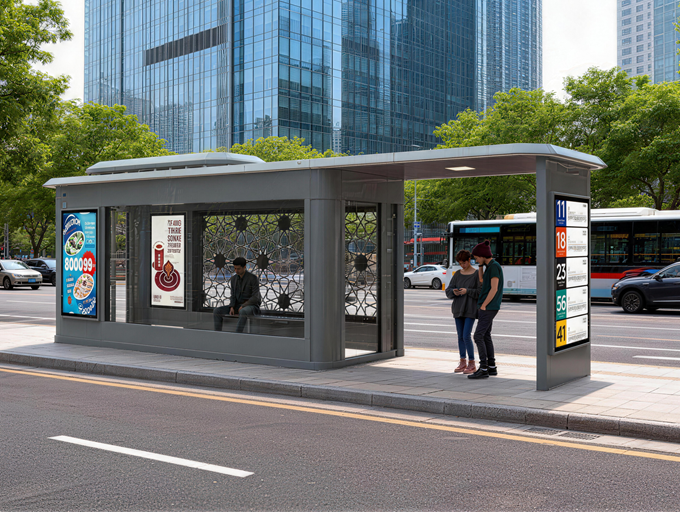
If-then rules for specifying at each volume
If you are ordering about 10 units → invest the freedom in site-specific detail
Job production makes customisation cheap. Use it: match canopy dimensions to each site's footfall direction, specify different corrosion grades per site per our material selection guide, and finalise drawing details late. Your constraint is per-unit price, not flexibility.
If you are ordering about 100 units → freeze drawings before tooling, then stop changing them
At batch volume, every change after jig fabrication costs rework in steel already cut. Freeze the drawing set at tooling sign-off, and route any late change through a formal variation process. If different sites need different variants (e.g. two canopy lengths), define them as named variants before tooling — factories can run two jig sets far more cheaply than revising one mid-batch.
If you are ordering about 500 units → negotiate the ramp rate, not just the price
At programme volume, the binding constraint is the installation programme, not the factory price. Agree a delivery curve (e.g. first 50 units week 6, then a fixed monthly rate) and a milestone payment schedule tied to it. Require first-article inspection before the ramp begins, and decide who inspects: your team, a third party (SGS/TÜV/BV), or a resident inspector during the first month of ramp.
The questions that reveal whether a factory can hold the schedule
Ask these before contract award, and score the specificity of the answers:
Question | Weak answer | Strong answer |
What is your current order backlog and free slot for our volume? | "We can start anytime" | A named production slot with week numbers |
How many shelters of this type do you ship per month? | A rounded large number | A figure consistent with their line count and coating oven capacity |
What happens to our schedule if a raw material shipment slips? | "Very unlikely" | Named alternative suppliers and a buffer policy |
What is your first-article inspection process at our volume? | "We check everything" | Written FAI procedure, what is checked, who signs |
Can we place a resident or third-party inspector during ramp? | Resistance or extra-charge ambiguity | A defined access procedure and standard rates |
What is the payment milestone structure for phased delivery? | Full prepayment pressure | Milestones tied to material, first batch and shipment events |
Exact YEROO lead times, MOQ and payment terms for each volume tier are confirmed at quotation: 【YEROO DATA NEEDED: standard and custom lead times, MOQ policy and payment terms by order volume tier】.
Common multi-unit ordering mistakes and their cost
Mistake | Why it happens | Corrective cost |
Treating a 500-unit order as a large version of a 10-unit order | Procurement process unchanged from pilot phase | Mid-programme redesign; rework on cut steel; 1–3 month slip |
Freezing drawings too late at batch volume | Stakeholders keep adding site requests | Jig rework and batch inconsistency |
Negotiating only on unit price at programme volume | Price is the easiest variable to compare | No delivery curve in the contract; installation crews idle waiting for containers |
Skipping first-article inspection to save time | Production slot already confirmed | A systemic defect repeats across hundreds of units before it is caught |
Single shipment for a 100+ unit programme | Simpler logistics on paper | Warehousing burden at site; damage risk concentrated in one freight event |
No spares strategy at order stage | Spares feel like a later problem | Year-2 panel or glazing orders rebuilt from scratch at small-lot pricing |
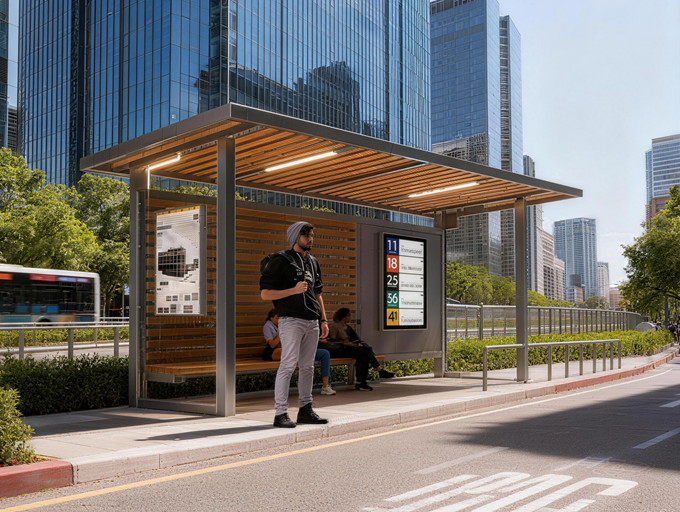
How YEROO plans a multi-unit programme
For a 100-500 unit programme, YEROO's standard planning sequence is:
Engineering review and drawing freeze — site variants defined, corrosion grades mapped per location, drawings signed off for tooling.
Production slot confirmation — cutting, welding and coating capacity reserved against the agreed delivery curve.
First article — the first unit is inspected against the drawing with the buyer's or third-party inspector welcome on site.
Batch ramp — production proceeds at the contracted rate, with AQL sampling per batch and photo/video QC records per container.
Phased shipment — containers scheduled to match the installation programme, with packing designed for the destination's handling equipment.
YEROO has delivered phased programmes across Hungary, Australia, Romania and Southeast Asia. For a capacity assessment against your programme, contact the YEROO export team with unit quantity, target start date and installation schedule, or browse the bus shelter product range and project references.
FAQ
What is the minimum order quantity for bus shelters from a Chinese factory?
Most factories, including YEROO, accept small pilot orders for standard models; custom models usually carry a higher MOQ because of tooling. Confirm the current MOQ per model at quotation: 【YEROO DATA NEEDED: MOQ by product line (standard, custom, BRT, smart)】.
How long does it take a bus shelter factory to produce 100 units?
Expect a fixed production slot after drawing freeze, then batch output governed by the coating line and assembly bays. Typical industry lead times for 100 units range from 45–90 days after drawing freeze (indicative global range). YEROO confirms the exact schedule at quotation: 【YEROO DATA NEEDED: confirmed lead time for 100-unit batch orders】.
Do bus shelter prices drop significantly at higher volumes?
Yes, in two steps. Moving from job to batch production typically cuts per-unit price by 20–35% because tooling and setup costs are amortised. At programme volume (200+ units), further reductions come from raw material block purchasing and line efficiency. Coating, glazing and electronics specs limit how far the price can fall.
Can I order different shelter variants in one large order?
Yes, but define them as named variants before tooling sign-off. Factories plan variants as separate jig sets and nesting programmes; mid-batch changes are rework. Two or three well-defined variants run efficiently; twenty site-specific one-offs do not.
Should I inspect a large bus shelter order before shipment?
At 100+ units, always. Use first-article inspection before the ramp plus AQL sampling per batch, either with your own inspector, a resident inspector during ramp-up, or a third party such as SGS, TÜV or Bureau Veritas. Inspection cost is a small fraction of the rework and traffic-management cost of fixing defects after installation.
What does a bus shelter factory need from me to start production?
A frozen drawing set (or an approved YEROO standard model with site variants), the corrosion grade per site, glazing and display specification, electrical standards for the destination market, and confirmed milestone terms. Unfrozen drawings are the single biggest cause of lead-time slip at batch and programme volumes.










 Address:North Tower 904,New World Times Center,Guangyuan Dong Road ,Guangzhou,China
 Phone: +86 13826225776
 Email:yeroo10@3dyeroo.com


