Procuring bus shelters for a city rollout, transit authority tender, or private development means choosing more than materials and dimensions. You also need to decide how closely your supplier will be involved in design ownership, engineering, and branding. Two production models dominate the transit shelter industry: OEM and ODM. Each serves a different procurement strategy, risk appetite, and timeline.
This guide explains how OEM bus shelter manufacturing differs from ODM production, where each model creates value, and how YEROO's 25 years of OEM/ODM experience help procurement officers, urban planners, and media operators make the right choice for their projects.
What Is OEM Bus Shelter Manufacturing?
OEM stands for Original Equipment Manufacturer. In the bus shelter industry, an OEM supplier builds shelters according to your exact drawings, specifications, and branding. You own the design. The manufacturer owns the production capability, quality control, and supply chain.
A typical OEM bus shelter project starts with a design package supplied by the client. This may include CAD drawings, structural calculations, material schedules, finish specifications, and glazing requirements. The OEM partner reviews the package for manufacturability, suggests adjustments if certain details raise cost or lead-time issues, and then produces the units under the client's brand.
The OEM model is common among large municipal authorities, transport operators with established design standards, and outdoor media companies that want a consistent product identity across multiple cities. For example, a European transit authority may already have a standard shelter module approved for disability access, wind loading, and vandal resistance. It sends that module to an OEM manufacturer for volume production.
YEROO's OEM service covers full fabrication in its 31,000-square-metre Foshan facility. The process includes laser cutting, CNC bending, welding, hot-dip galvanising to ISO 1461, powder coating, glass installation, electrical integration for smart features, and final inspection. Clients retain control over every design detail while benefiting from Chinese manufacturing scale and export experience to over 110 countries.
What Is ODM Bus Shelter Manufacturing?
ODM stands for Original Design Manufacturer. In this model, the supplier provides both the design and the manufacturing. The client selects from existing product families or requests modifications to a proven platform, but does not start from a blank sheet.
ODM bus shelter manufacturing suits buyers who need a reliable product quickly and do not have an in-house engineering team to develop a full specification. A city council launching its first smart shelter programme, a contractor fulfilling a turnkey contract, or a media operator entering a new market often prefers ODM because it shortens development time and reduces technical risk.
YEROO's ODM catalogue includes smart bus shelters, solar-powered units, classic steel and glass shelters, BRT platforms, air-conditioned shelters, and advertising-enabled models. Each platform has already been engineered for structural safety, weather resistance, and modularity. Buyers can adjust dimensions, colours, branding panels, roof styles, lighting, and optional features such as real-time displays, USB charging, or Wi-Fi without redesigning the underlying structure.
The key advantage of ODM is speed. Because the core engineering is already validated, sample production and mass production can begin faster than under a fully custom OEM process. This is particularly valuable when tender deadlines are tight or when a pilot project must be delivered before a wider rollout is approved.
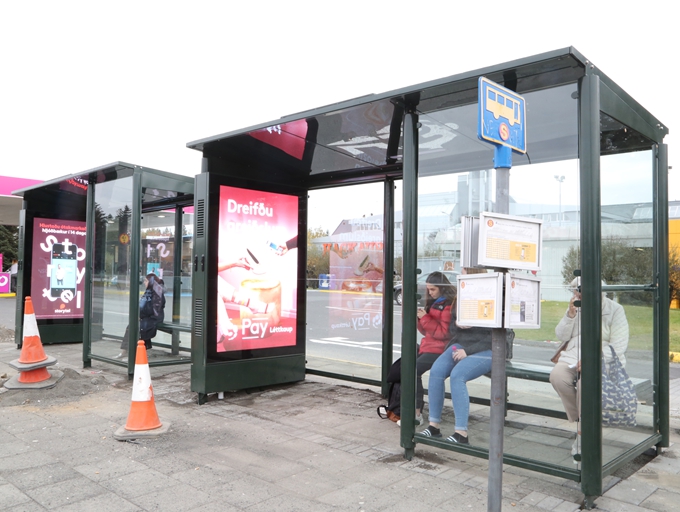
OEM vs ODM Bus Shelter Manufacturing: Side-by-Side Comparison
Factor | OEM Bus Shelter Manufacturing | ODM Bus Shelter Manufacturing |
Design ownership | Client owns drawings and IP | Supplier owns base design; client licenses/modifies it |
Customisation level | Unlimited within engineering limits | High, based on proven platform options |
Engineering responsibility | Client or client's designer | Supplier's engineering team |
Typical lead time | Longer; includes design review and tooling | Shorter; validated platforms speed production |
Unit cost at volume | Competitive once design is locked | Competitive from the first order due to reused tooling |
Best for | Large rollouts, brand consistency, regulated tenders | First-time buyers, pilots, tight deadlines, limited design resource |
Prototyping | Custom sample from client drawings | Sample from existing platform with selected options |
Quality liability | Shared; client specifies standards | Supplier responsible for platform compliance |
Certifications | Client specifies; supplier implements | Supplier's existing certifications apply |
This comparison shows that neither model is universally better. The right choice depends on how much design control you need, how quickly you must deploy, and whether your organisation has the technical resource to manage a fully custom specification.
When to Choose OEM for Your Bus Shelter Project
OEM manufacturing is the stronger choice when design identity, compliance with specific standards, or long-term product consistency matters more than speed.
You own an approved design. Many transport authorities maintain a standard shelter drawing that contractors must follow. OEM production protects that investment and ensures every unit matches the approved drawing exactly.
You need city-specific branding. A distinctive shelter shape, custom colour palette, integrated advertising hardware, or branded lighting can all be specified in an OEM package. The shelter becomes part of the city's visual identity.
Your tender demands traceable compliance. If the contract references EN 1991-1-4 wind load calculations, BS 8110 structural principles, or local disability access codes, an OEM relationship lets you embed those requirements directly into the production specification and inspection protocol.
You plan a multi-phase rollout. A single OEM design can be reproduced over several years with identical dimensions and finishes. This simplifies spare parts, maintenance training, and public recognition.
You want to protect intellectual property. Because you retain the drawings, competitors cannot easily copy your shelter profile through the same supplier.
YEROO has supplied OEM bus shelters for transport projects across Europe, Australia, Southeast Asia, and the Middle East. In each case, the client provided the design, and YEROO delivered fabrication, surface treatment, packaging, and shipping under the client's brand.
When ODM Is the Smarter Choice
ODM manufacturing fits projects where time, technical support, or budget flexibility is the main constraint.
You are launching a pilot programme. A city testing its first smart shelters may not want to invest in a fully custom design before validating passenger feedback and advertiser interest. An ODM smart bus shelter platform can be deployed quickly and upgraded later.
You lack in-house design resource. Developing a full shelter specification requires structural engineering, materials expertise, and familiarity with local codes. An ODM supplier provides that expertise as part of the package.
You need to hit a tender deadline. Because the base design already exists, quoting and sampling move faster. You can submit a compliant proposal with a known product rather than waiting for custom engineering.
You want predictable pricing. Reused tooling and established bills of material make ODM costs easier to forecast, especially for smaller orders.
You are expanding an existing fleet. If your current shelters already match a standard ODM platform, adding matching units is straightforward.
YEROO's ODM clients often start with a catalogue model and then request local adaptations, such as tropical roof ventilation, heated seating for cold climates, or reinforced glazing for high-vandalism areas. The result is a shelter that feels custom without the cost and timeline of a full OEM development.
How YEROO Supports Both OEM and ODM Clients
YEROO's manufacturing operation in Foshan, Guangdong, is structured to handle both production models under one roof. The 31,000-square-metre facility includes steel and aluminium fabrication lines, a surface treatment centre, glass processing, electrical assembly, and a quality laboratory.
For OEM clients, YEROO provides:
For ODM clients, YEROO provides:
Optional smart features including LCD displays, LED lighting, solar panels, USB charging, and Wi-Fi
All production follows ISO 9001 quality management principles. YEROO's team includes structural engineers, industrial designers, electrical technicians, and quality inspectors who work directly with client specifications or recommend platform-based solutions.
Whether you choose OEM or ODM, the same quality gates apply: incoming material inspection, in-process welding and coating checks, glass safety verification, electrical testing for smart units, and final pre-shipment inspection. YEROO also supports factory acceptance tests and third-party inspections when required by the contract.
Frequently Asked Questions
What does OEM mean in bus shelter manufacturing?
OEM means the shelter is built to the client's own design and specifications. The manufacturer handles production, surface treatment, and assembly, while the client retains ownership of the drawings and product identity.
What does ODM mean in bus shelter manufacturing?
ODM means the supplier provides a pre-engineered shelter design that the client can configure. The supplier owns the base intellectual property, and the buyer benefits from faster development and proven engineering.
Is OEM more expensive than ODM?
OEM often has higher upfront engineering and tooling costs, but unit prices at volume can be very competitive. ODM usually costs less for small batches and pilot projects because the design work is already amortised across multiple clients.
Can I add my branding to an ODM bus shelter?
Yes. Most ODM platforms include options for custom colours, logo panels, branded lighting, and advertising display integration. The shelter looks like your product even though the underlying platform is shared.
Which model is better for a smart city bus shelter project?
It depends on your resources. If you have a defined smart city design standard, OEM gives you full control. If you need to deploy quickly with IoT features such as real-time displays and environmental sensors, ODM is usually faster and lower risk.
How do I choose between OEM and ODM?
Start by assessing your design ownership, timeline, budget, and technical capacity. If you own the design and need long-term consistency, choose OEM. If you need a proven product fast with engineering support, choose ODM. YEROO can advise on the best fit during the quotation stage.
Conclusion: Match the Model to Your Project
OEM and ODM bus shelter manufacturing are not competitors. They are two different routes to the same destination: a durable, compliant, attractive transit shelter that serves passengers and supports your operational goals.
Choose OEM when you need full design control, brand protection, and compliance with a precise specification. Choose ODM when you want proven engineering, faster delivery, and lower technical risk.
YEROO has spent 25 years refining both approaches. With a 31,000-square-metre factory, exports to over 110 countries, and ISO 9001-certified quality systems, YEROO can manufacture your design or recommend a platform that fits your market.
Explore YEROO's bus shelter range to see the platforms available for ODM customisation, or contact the team to discuss an OEM project built to your exact drawings.










 Address:North Tower 904,New World Times Center,Guangyuan Dong Road ,Guangzhou,China
 Phone: +86 13826225776
 Email:yeroo10@3dyeroo.com


