If you are preparing a transit infrastructure budget, one question keeps returning: what is the realistic bus shelter cost for your project? Procurement officers, city planners and media operators all face the same challenge. A bus shelter is not an off-the-shelf commodity; it is a custom-engineered structure that must survive vandalism, weather, UV exposure and decades of passenger use while integrating with the surrounding urban landscape.
At YEROO, we have spent 25 years manufacturing bus shelters, solar benches and outdoor advertising structures for clients in more than 110 countries. Over that time, we have seen how small specification changes can swing the final price by 40% or more. This guide explains exactly what drives bus shelter cost in 2026, where your money goes, and how to protect the value of your investment without cutting corners that shorten service life.
What Determines Bus Shelter Cost?
A useful way to think about bus shelter cost is to separate the structure itself from the services that surround it. The unit price on a quotation sheet is only part of the story. The total project cost also includes design, tooling, transport, foundation work, electrical connections and commissioning.
The six biggest variables are:
Size and passenger capacity – A single-bay shelter for a rural stop costs far less than a three-bay, wheelchair-accessible shelter for a high-volume urban corridor.
Frame material – Mild steel, hot-dip galvanised steel, aluminium and stainless steel each have different material, fabrication and corrosion-protection costs.
Glazing specification – Standard tempered glass, laminated glass and polycarbonate vary in price, safety rating and long-term clarity.
Roof and weatherproofing – Polycarbonate sheet, metal roofing, integrated gutters and drainage all affect durability and cost.
Smart features – Real-time displays, LED lighting, solar panels, USB charging, Wi-Fi and CCTV add hardware, software and commissioning costs.
Volume and delivery model – A one-off custom shelter carries the full design and tooling burden. A production run of 50 or 100 units spreads those costs across many sites.
Transit authorities should also factor in the local installation environment. A shelter mounted on an existing concrete slab in a temperate city is simpler to deploy than one requiring deep foundations in a coastal or high-wind zone. YEROO's engineering team reviews each project's climate data, soil conditions and transport access before final pricing.
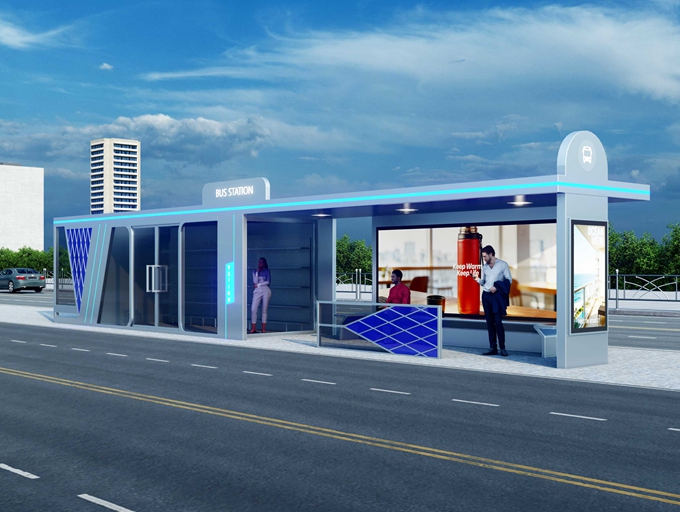
Material and Finish: How Specifications Move the Price
The frame accounts for roughly 35–45% of a standard shelter's material cost. Choosing the right metal is therefore one of the most important procurement decisions.
Hot-Dip Galvanised Steel
Mild steel with hot-dip galvanising remains the most common choice for classic bus shelters. The galvanised layer provides long-term corrosion protection at a moderate price. For inland urban environments, a well-maintained galvanised shelter can last 15–20 years. YEROO applies powder coating over galvanising in our 31,000sqm factory to add colour stability and scratch resistance.
Aluminium
Aluminium frames are lighter, easier to handle on site and naturally corrosion-resistant. That makes them popular in coastal Australia, the Middle East and anywhere salt or humidity is a concern. The raw material costs more per kilogramme than steel, but savings often appear in transport and installation.
Stainless Steel
Stainless steel delivers the longest service life and the lowest maintenance burden, especially in aggressive environments. It is also the most expensive frame option. For prestige locations, heritage districts and coastal regions, the premium is usually justified by reduced lifecycle cost.
Glazing and Roofing
Tempered glass is the default for contemporary designs because it is strong, clear and recyclable. Laminated glass adds safety and acoustic benefits but costs more. Polycarbonate is lighter and shatter-resistant, though it can yellow over time if the UV coating is sub-standard.
Specification Tier | Frame | Glazing | Roof | Approx. Unit Price* | Best For |
Entry-level | Galvanised steel | Tempered glass | Polycarbonate or metal | $1,800 – $3,500 | Rural stops, low-traffic routes, tight budgets |
Mid-range | Galvanised steel + powder coat | Tempered or laminated glass | Metal roof with gutter | $3,500 – $6,500 | Urban corridors, standard city networks |
Premium | Aluminium or stainless steel | Laminated glass | Integrated metal roof | $6,500 – $12,000 | Coastal, heritage, high-specification districts |
Smart shelter | Aluminium/stainless + IoT | Laminated or toughened glass | Integrated roof with solar | $10,000 – $25,000+ | Smart city corridors, media-operator revenue sites |
*Prices are indicative FOB estimates for standard single-bay units and exclude transport, foundation and installation. Contact YEROO for a project-specific quotation.
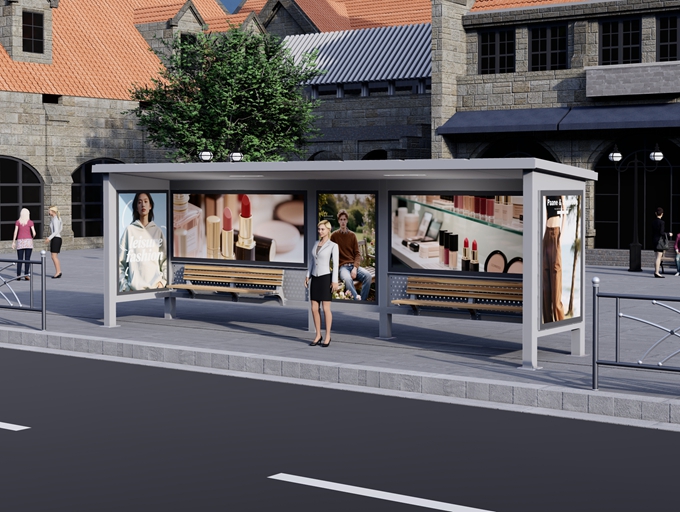
Smart Features, Lighting and Digital Hardware
The fastest-growing cost centre in modern bus shelter procurement is smart technology. A basic shelter protects passengers from rain and sun. A smart shelter becomes a piece of urban data infrastructure.
Passenger Information Displays
Real-time arrival displays typically add 1,500–4,000 per shelter depending on screen size, brightness, sunlight readability and integration with the local transit data feed. Screens built for outdoor use need IP65-rated enclosures, anti-glare glass and automatic brightness control.
LED Lighting and Solar Power
Energy-efficient LED lighting is now standard on many YEROO shelters. Solar-powered lighting and solar bus shelters remove the need for grid connection, which can save trenching and cabling costs in remote locations. Solar systems add 800–2,500 to the unit but eliminate ongoing electricity charges.
Connectivity and Sensors
Wi-Fi access points, CCTV, air-quality sensors and passenger-counting cameras turn a shelter into a data node. Hardware costs range from $500 for a simple sensor package to $5,000 or more for a fully connected digital shelter. Ongoing software licences and data plans should be included in the total cost of ownership.
Media operators evaluating DOOH advertising shelters should also budget for content management systems, remote monitoring and advertising sales platforms. These are not part of the physical shelter, but they determine whether the shelter generates revenue or simply provides public service.
Transport, Installation and Foundation Work
A common budgeting mistake is to compare manufacturer quotations without asking what is included. Some suppliers quote ex-works, meaning you bear all shipping, customs and installation costs. Others offer a delivered or installed price.
Shipping
A standard flat-pack shelter reduces shipping volume and freight cost. For example, a single-bay steel shelter can often ship knocked-down in one or two pallet spaces. Larger shelters, particularly BRT bus shelters with integrated canopies, require flat-bed transport and careful route planning.
Foundations
Most shelters need a concrete foundation or anchor bolts set into an existing slab. Foundation costs range from $300 for a simple bolt-down pad to $2,000 or more where excavation, drainage and reinforcement are required. Underground utilities, pavement restoration and traffic management add further expense.
Installation Labour
A two-person crew can install a simple shelter in half a day. Smart shelters with electrical work, display mounting and network commissioning may need electricians, network engineers and crane hire. YEROO provides installation drawings and, where needed, supervises commissioning to avoid costly rework.
OEM vs ODM: How Procurement Model Changes Pricing
The way you engage a manufacturer changes the cost structure as much as the materials do.
OEM Manufacturing
Under an OEM arrangement, the buyer owns the design or works with the manufacturer to develop a bespoke shelter. This model suits cities with strict branding guidelines, accessibility requirements or unusual site constraints. The trade-off is higher upfront tooling and engineering cost, typically 5,000–15,000 for a new design, plus longer lead times. Once production scales, unit costs fall.
ODM Manufacturing
ODM means selecting an existing design from the manufacturer's catalogue and customising colours, logos and minor dimensions. Because the engineering is already proven, lead times are shorter and minimum order quantities are lower. ODM is usually the most cost-effective route for standard city programmes.
YEROO operates both models from our Foshan facility. For a quick budget estimate, many clients start with an ODM design and move to OEM only if the specification demands it.
Protecting Value: Lifecycle Cost vs Purchase Price
The cheapest quotation rarely delivers the lowest total cost of ownership. A shelter that needs repainting after five years, glass replacement after vandalism, or structural repair after corrosion will cost more over its life than a well-built unit that reaches 15–20 years with routine cleaning.
Key lifecycle factors to evaluate include:
Independent research from the International Association of Public Transport (UITP) confirms that lifecycle costing is now the standard approach for transit infrastructure procurement in Europe and Asia-Pacific. The American Public Transportation Association (APTA) similarly recommends evaluating shelter projects over a 15-year horizon rather than on capital cost alone.
Frequently Asked Questions
How much does a standard bus shelter cost?
A standard single-bay galvanised-steel shelter typically falls between $2,000 and $6,500 excluding transport and installation. Premium aluminium, stainless steel or smart shelters can range from $6,500 to $25,000 or more depending on specification.
Why do bus shelter quotes vary so much between manufacturers?
Quotations differ because of material grades, coating systems, glass safety standards, included services and warranty length. A lower price may reflect thinner steel, lower-grade glazing or ex-works delivery. Always compare specifications line by line.
Is it cheaper to buy a standard design or go custom?
Standard ODM designs are usually cheaper for typical city programmes because engineering and tooling costs are already absorbed. Custom OEM designs make sense when branding, accessibility or site constraints demand unique geometry.
Do smart bus shelters cost more to maintain?
Smart shelters have additional electrical and digital components, so maintenance budgets should include screen cleaning, software updates and occasional hardware replacement. However, solar lighting and LED systems reduce energy costs compared with older fluorescent shelters.
What hidden costs should procurement officers watch for?
Common overlooked items include foundation work, electrical grid connection, data-plan subscriptions for connected displays, import duties, inland transport, cranage, pavement reinstatement and ongoing cleaning contracts.
How long does a bus shelter typically last?
A well-built galvanised-steel shelter with quality powder coating lasts 15–20 years in normal urban conditions. Aluminium and stainless steel units can exceed 20 years, while polycarbonate roofs may need replacement after 10–15 years depending on UV exposure.
Get a Transparent Bus Shelter Cost Estimate for Your Project
Understanding bus shelter cost is the first step to building a transit infrastructure programme that fits both this year's budget and the next decade's maintenance plan. The right specification balances passenger comfort, durability, smart-city readiness and lifecycle value.
YEROO manufactures bus shelters, smart bus shelters, solar-powered transit structures and outdoor advertising solutions from a 31,000sqm ISO-certified facility. Whether you need a single prototype or a city-wide roll-out, our team can provide a detailed quotation that breaks down materials, features, transport and installation.
Request a free project estimate today and see how YEROO delivers transit infrastructure built for real-world budgets and 26-year performance.










 Address:North Tower 904,New World Times Center,Guangyuan Dong Road ,Guangzhou,China
 Phone: +86 13826225776
 Email:yeroo10@3dyeroo.com


